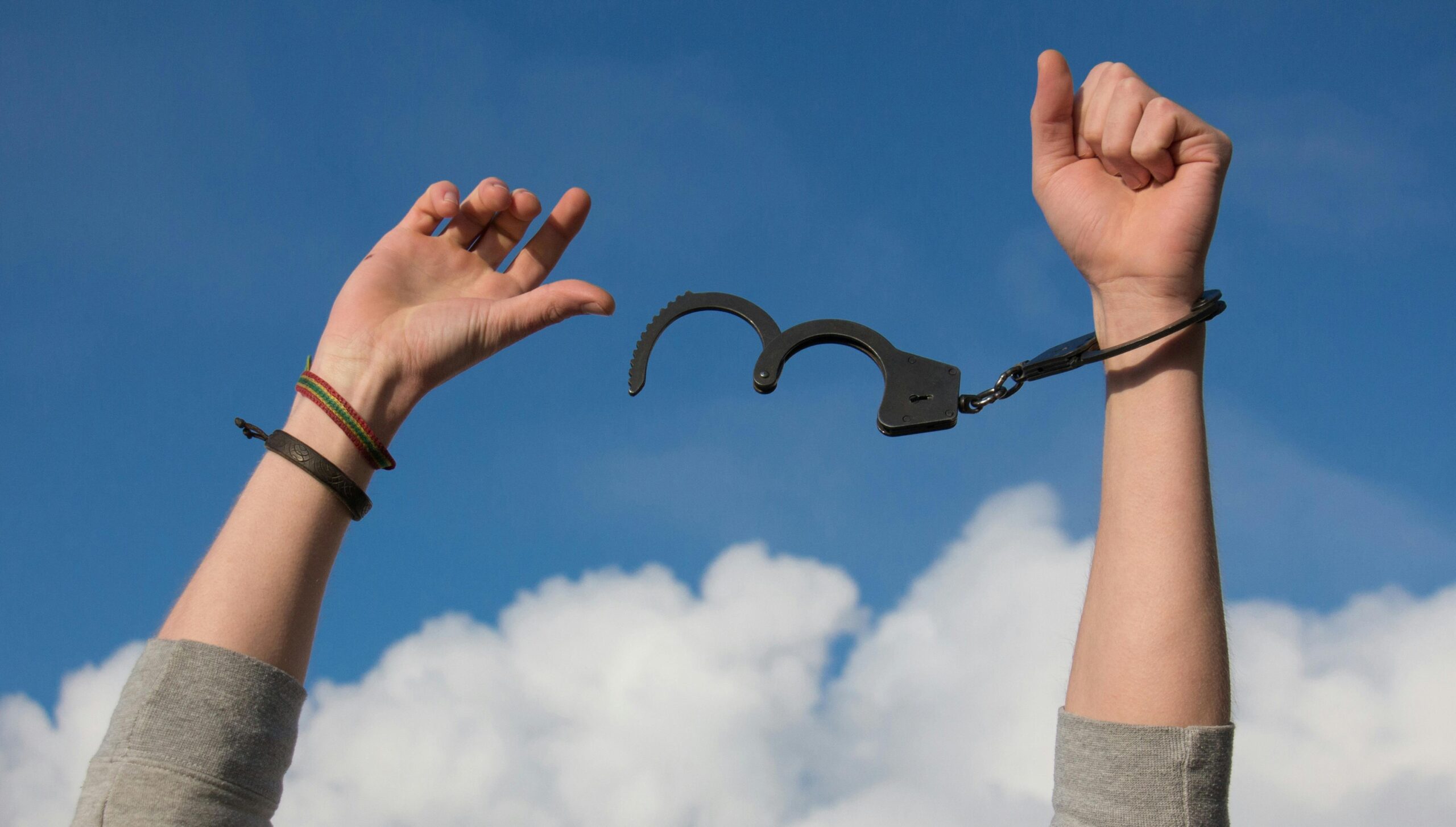
Our brains are hardwired to focus on the negative, but understanding this tendency opens the door to transforming how we perceive the world around us.

🧠 The Science Behind Our Negative Lens
Negativity bias is a psychological phenomenon deeply rooted in human evolution. Our ancestors survived by paying attention to threats—the rustling in the bushes that could signal a predator, the poisonous berries that could end their lives. This survival mechanism meant that negative experiences, emotions, and information were processed more thoroughly than positive ones, creating lasting impressions that kept humans alive.
Research conducted by neuroscientist Dr. Rick Hanson reveals that our brains are like Velcro for negative experiences and Teflon for positive ones. Negative stimuli produce more neural activity than equally intense positive stimuli, and this information is stored more quickly and recalled more easily. Studies using brain imaging have shown that negative images generate more electrical activity in the cerebral cortex than positive or neutral images.
This biological predisposition doesn’t just affect individual psychology—it shapes collective consciousness and public opinion. When society encounters news, events, or information, the negative aspects receive disproportionate attention and generate stronger emotional responses. Understanding this foundation is crucial for anyone seeking to shift public sentiment toward more balanced or positive perspectives.
📰 How Media Amplifies Our Negativity Addiction
The media landscape has evolved to exploit our negativity bias with surgical precision. The old journalism adage “if it bleeds, it leads” reflects a deep understanding of human psychology. News organizations, competing for attention in an oversaturated information environment, have discovered that negative headlines generate more clicks, shares, and engagement than positive ones.
A comprehensive study analyzing millions of news headlines found that articles with negative words like “worst,” “never,” and “wrong” performed significantly better than those with positive or neutral language. Social media algorithms, designed to maximize engagement, further amplify this effect by promoting content that generates strong emotional reactions—and negative emotions tend to be more visceral and immediate than positive ones.
This creates a distortion effect where public perception of reality becomes increasingly pessimistic, even when objective data tells a different story. Crime rates might be declining, but if media coverage of crime increases, people perceive their communities as more dangerous. Economic indicators might be improving, but negative financial news dominates headlines, shaping collective anxiety about the future.
The Feedback Loop of Negativity
The relationship between media, public opinion, and negativity bias creates a self-reinforcing cycle. Media outlets provide negative content because audiences respond to it, and audiences have been conditioned to expect and seek negative information because that’s what’s consistently provided. Breaking this cycle requires conscious intervention at multiple levels—individual, organizational, and societal.
✨ Recognizing the Gap Between Perception and Reality
One of the most powerful steps toward overcoming negativity bias is recognizing the often-substantial gap between how we perceive the world and how it actually is. Psychologist Steven Pinker’s extensive research demonstrates that by nearly every objective measure—violence, poverty, disease, literacy, freedom—the world has improved dramatically over recent decades, yet surveys consistently show that most people believe things are getting worse.
This perception-reality gap manifests across numerous domains. People overestimate crime rates, underestimate progress on poverty reduction, and maintain pessimistic views about global health despite remarkable improvements. The data tells a story of human progress, but our negativity bias filters this information through a lens that emphasizes setbacks and ignores gains.
Creating awareness of this gap doesn’t require toxic positivity or ignoring genuine problems. Instead, it involves cultivating what researcher Hans Rosling called “factfulness”—a commitment to basing worldviews on facts rather than dramatic instincts. When public discourse incorporates more accurate baseline information about trends and progress, opinion can shift toward more balanced and ultimately more positive perspectives.
🔄 Strategies for Individual Mindset Transformation
Overcoming negativity bias begins with personal awareness and intentional practice. While we cannot completely eliminate this evolutionary tendency, we can develop mental habits that counterbalance its effects and gradually reshape our automatic responses to information and experiences.
The Three-to-One Positivity Ratio
Psychologist Barbara Fredrickson’s research on positive emotions suggests that we need approximately three positive experiences to counterbalance the psychological impact of one negative experience. Applying this principle requires actively seeking out and savoring positive moments throughout the day. This doesn’t mean ignoring problems but rather ensuring that positive experiences receive adequate attention and processing time.
Practical applications include maintaining a gratitude journal, deliberately pausing to appreciate pleasant moments, and sharing positive experiences with others to reinforce their neurological impact. Over time, these practices can help rewire neural pathways, making positive recognition more automatic and natural.
Mindful Media Consumption
Developing a more intentional relationship with information sources can dramatically impact personal outlook and, collectively, public opinion. This involves:
- Setting specific times for news consumption rather than constant scrolling
- Diversifying information sources to include solutions-focused journalism
- Following accounts and publications that highlight progress and innovation
- Fact-checking alarming headlines before accepting them as accurate representations of reality
- Balancing awareness of problems with exposure to people working on solutions
These practices don’t create an unrealistic bubble of positivity but rather provide a more accurate, balanced view of reality that naturally shifts perspective away from overwhelming negativity.
🌍 Solutions-Focused Communication and Public Discourse
The way information is framed and communicated has profound effects on public opinion. Solutions journalism—a movement that reports rigorously on responses to social problems—offers an alternative to traditional problem-focused reporting without sacrificing journalistic integrity or critical analysis.
When the Seattle Times published a solutions-focused series on homelessness, reader response was dramatically different from reactions to traditional coverage of the issue. Rather than feeling overwhelmed and disengaged, readers expressed increased optimism about addressing the problem and greater willingness to support interventions. This demonstrates that how we communicate about challenges directly influences public sentiment and, ultimately, collective willingness to engage with solutions.
The Power of Progress Narratives
Incorporating progress narratives into public discourse doesn’t mean ignoring ongoing challenges or pretending problems don’t exist. Instead, it means contextualizing current challenges within longer trajectories of change, highlighting what’s working alongside what isn’t, and ensuring that stories of human ingenuity and resilience receive proportional attention.
Organizations like Our World in Data, the Solutions Journalism Network, and Future Crunch have demonstrated that fact-based, progress-oriented content finds substantial audiences hungry for balanced perspectives. As these approaches gain traction, they contribute to gradual shifts in public opinion toward more nuanced, less catastrophic worldviews.
💡 Leveraging Social Proof for Positive Shift
Public opinion doesn’t form in isolation—it emerges through social processes where individuals look to others for cues about appropriate attitudes and beliefs. This social dimension of opinion formation creates opportunities for intentional positive influence through strategic use of social proof.
When people perceive that others are adopting more balanced, constructive attitudes, they become more likely to shift their own perspectives. This principle operates through multiple mechanisms including social media sharing patterns, conversation norms within communities, and the narratives that gain cultural prominence.
Creating Positive Contagion
Research on emotional contagion demonstrates that emotions spread through social networks. A large-scale study on Facebook found that when positive content in people’s news feeds increased, they produced more positive posts themselves. This suggests that deliberately amplifying positive, constructive content can create ripple effects that gradually shift broader opinion patterns.
Practical applications include:
- Sharing stories of progress, innovation, and successful problem-solving
- Commenting constructively on negative posts to model balanced perspectives
- Celebrating others’ successes and positive contributions publicly
- Creating and participating in communities focused on solutions and possibilities
- Recognizing and appreciating people working toward positive change
🏢 Institutional and Organizational Approaches
While individual efforts matter, shifting public opinion at scale requires institutional change. Organizations, media companies, educational institutions, and civic groups all play roles in shaping collective consciousness and can implement practices that counterbalance negativity bias.
Redefining Success Metrics
Media organizations that evaluate success solely through engagement metrics inevitably gravitate toward negative content because it generates immediate clicks and shares. Alternative metrics that value constructive impact, audience satisfaction, and contribution to public understanding can incentivize different editorial choices.
Some publications have begun experimenting with “constructive journalism” approaches that maintain rigorous standards while consciously working against reflexive negativity. Early results suggest these approaches can maintain audience engagement while improving reader satisfaction and sense of agency.
Educational Interventions
Teaching critical thinking, media literacy, and awareness of cognitive biases in educational settings equips future generations to resist automatic negativity responses. When students learn about negativity bias, they develop metacognitive awareness that helps them question their initial reactions and seek more balanced information.
Curricula that incorporate data literacy—teaching students to interpret statistics, understand trends, and distinguish between anecdotes and evidence—create populations better equipped to form opinions based on reality rather than cognitive distortions.
🔮 The Role of Technology in Shaping Opinion
Technology platforms wield enormous influence over what information reaches audiences and how it’s presented. As awareness grows about the negative consequences of engagement-maximizing algorithms, some platforms are experimenting with alternative approaches that prioritize user wellbeing and constructive discourse.
Features that could help counterbalance negativity bias include algorithm adjustments that don’t exclusively prioritize engagement, tools that encourage users to read articles before sharing them, prompts that suggest positive content alongside negative, and design choices that reduce doomscrolling behaviors.
Individual users can also leverage technology intentionally by using apps and tools designed to promote mental wellbeing and balanced perspectives. Applications focused on gratitude practice, mindfulness, and positive psychology offer structured approaches to counteracting negativity bias through regular, guided exercises.
🌱 Cultivating Realistic Optimism
The goal of overcoming negativity bias isn’t to replace it with unrealistic positivity that ignores genuine problems. Instead, the aim is developing what psychologists call “realistic optimism” or “tragic optimism”—the ability to acknowledge difficulties while maintaining agency, hope, and focus on possibilities for improvement.
This balanced perspective recognizes that the world contains both suffering and beauty, setbacks and progress, problems and solutions. It accepts negative realities without allowing them to define entire worldviews or paralyze constructive action. Research shows that people with realistic optimism demonstrate better mental health, greater resilience, and increased likelihood of engaging in problem-solving behaviors.
From Awareness to Action
Ultimately, shifting public opinion toward positivity serves a purpose beyond feeling better—it enables more effective collective action. When communities believe problems are solvable and progress is possible, they invest energy in solutions rather than succumbing to despair or apathy.
This doesn’t mean minimizing serious challenges like climate change, inequality, or political polarization. Rather, it means approaching these challenges with both clear-eyed assessment of difficulties and attention to promising interventions, successful examples, and human capacity for innovation and cooperation.
🚀 Building Momentum for Collective Change
Public opinion shifts gradually through accumulated individual changes, evolving social norms, and institutional adaptations. Each person who develops awareness of negativity bias and consciously works to counterbalance it contributes to broader cultural transformation.
This process accelerates when individuals share their practices and insights with others, when organizations model balanced communication approaches, when educators integrate relevant concepts into curricula, and when technology platforms make design choices that support human flourishing rather than exploit psychological vulnerabilities.
The encouraging reality is that this transformation is already underway. Growing interest in positive psychology, solutions journalism, constructive dialogue practices, and wellbeing metrics indicates increasing recognition that our default negativity bias doesn’t serve us well in the modern world. What kept our ancestors alive on the savannah can undermine our ability to address 21st-century challenges effectively.
🎯 Practical Steps Forward
Moving from understanding to action requires concrete, implementable practices. For individuals, this might mean establishing a daily gratitude practice, curating social media feeds intentionally, or committing to share one piece of positive news for every negative story consumed. For organizations, it could involve revising success metrics, training staff in constructive communication, or allocating resources to solutions-focused content.
Communities can create spaces for appreciative inquiry, where collective attention focuses on what’s working and how to build on it. Civic leaders can frame challenges in ways that acknowledge difficulties while highlighting agency and possibility. Parents can model balanced perspective-taking for children, teaching them to notice both problems and solutions in the world around them.
These practices work synergistically—individual changes influence social circles, organizational shifts affect broader discourse, and gradual cultural evolution makes balanced perspectives increasingly normal and accessible. The compound effect of many small changes can produce substantial transformation over time.

🌟 Embracing a More Balanced Collective Consciousness
Overcoming negativity bias represents one of the crucial challenges of our era. The same interconnected communication systems that can amplify fear and pessimism also offer unprecedented opportunities for sharing knowledge, celebrating progress, and coordinating constructive action. The choice of which potentials we activate lies partly with each individual and partly with collective decisions about values, priorities, and practices.
The path forward doesn’t require denying problems or adopting false cheerfulness. It demands something more difficult and more valuable: developing the psychological sophistication to hold complexity, to see both challenges and possibilities, to acknowledge suffering while refusing to let it define our entire worldview. This balanced consciousness doesn’t emerge automatically—it requires intention, practice, and mutual support.
As more individuals, organizations, and communities commit to this work, public opinion will gradually shift. Not toward naive optimism, but toward realistic hope. Not toward ignoring problems, but toward believing in our collective capacity to address them. Not toward passive positivity, but toward active engagement with creating better futures. This shift, already beginning, offers one of our most promising paths toward addressing the genuine challenges we face while maintaining the hope and energy necessary for constructive action.
The transformation of public opinion from reflexive negativity toward balanced realism represents both an individual journey and a collective project. Every person who questions their automatic negative reactions, every organization that communicates more constructively, every community that celebrates progress while acknowledging challenges—all contribute to a gradual but meaningful shift in how we collectively understand and engage with our world. This work matters not because problems don’t exist, but precisely because they do, and addressing them effectively requires the clarity, hope, and energy that come from overcoming our bias toward seeing only darkness. 🌅